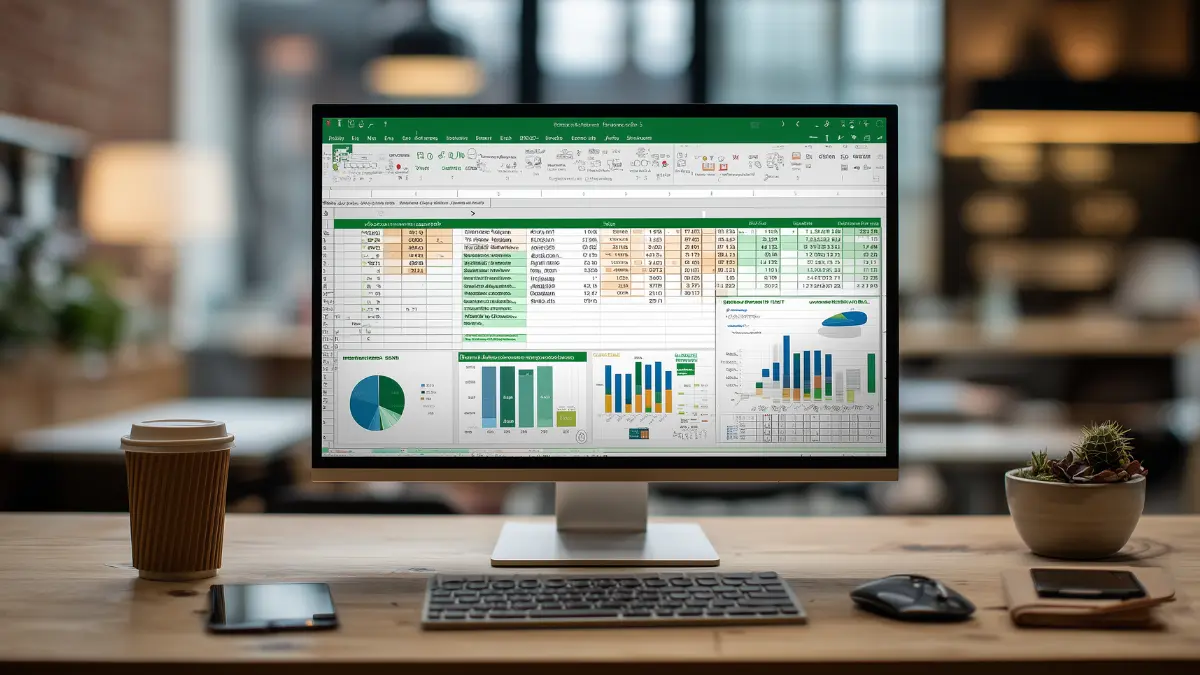
Digital Attendance List: How to Create and Use One Online
From a simple digital spreadsheet to a dedicated app — practical options for teachers, coaches and volunteers who want to stop managing paper.

A paper attendance list gets the job done until it gets wet, torn, or lost in a bag. A digital attendance list has its own failure modes — but they're usually easier to fix than a crumpled sheet from last March that nobody can read anymore.
This guide covers the options for creating and managing a digital attendance list in 2026: from a Google Sheet shared between two coaches, to a free app that handles multiple groups at once. The goal is to find the method that fits your actual situation, not the one with the most features.
You'll also find a free downloadable template if you want to start with a spreadsheet, and a practical comparison of the main tools if you're ready to move beyond Excel.
What 'Digital' Attendance Actually Means in Practice
The term covers a wide range of solutions, from a shared Google Sheet to a fully automated app with real-time statistics. It's worth being clear about what problem you're actually trying to solve before choosing a tool.
The simplest form of digital attendance is a spreadsheet: you open a file, tap or click names, and the data lives somewhere it can't get wet or lost. This solves the physical fragility problem but doesn't solve the speed problem — entering names on a phone in a spreadsheet is not faster than paper.
A proper digital attendance list — meaning one designed for the job — does two things well. First, it makes marking attendance faster than any alternative: a list of names, a tap per person, done. Research from the American Society for Engineering Education (ASEE) found that digital tools reduce attendance recording from an average of 345 seconds to 42 seconds — an 87% reduction. Second, it stores the data in a format that's immediately usable for follow-up, statistics, and exports without any additional work.
The choice between a spreadsheet and an app comes down to group size, session frequency, and whether you need real-time statistics or just a record.
- Spreadsheet: solves the 'lost paper' problem, not the 'slow roll call' problem
- Dedicated app: solves both — faster recording and immediately usable data
- ASEE: 345 sec → 42 sec with digital tools (87% faster than paper)
- Key question: do you need statistics, or just a record?
- Real-time collaboration: only possible with a shared app or Google Sheets
The 87% time reduction figure sounds dramatic, but it compounds: a teacher with six weekly classes reclaims roughly 25 hours a year just from the act of marking attendance — before counting follow-up, reporting, and data entry elsewhere.
Free Digital Attendance Template (.xlsx)
A ready-to-use digital attendance spreadsheet for Excel or Google Sheets. Pre-formatted for weekly sessions with automatic calculations, absent/present/late columns, and a printable summary sheet.
- Session-by-session grid for up to 40 participants
- Automatic attendance rate per member
- Monthly summary tab with trend indicators
- Compatible with Excel, Google Sheets, and LibreOffice
The Main Options for a Digital Attendance List
There are four practical ways to run a digital attendance list. Here's what each one is good for and where it falls short.
Option 1 — Google Sheets or Excel Online. The most accessible starting point. You build a grid yourself (or use our template), share the link with co-organisers, and everyone can edit from any device. The limitation is the mobile experience: Google Sheets works on a phone, but it's not fast. For marking attendance for 25 people in a gym with cold hands, it's clunky.
Option 2 — Shared Google Form. Create a form with a name dropdown, timestamp it, and responses go into a spreadsheet automatically. Works well for self-registration (members check themselves in on a tablet at the door) but requires a device on-site and a bit of setup. Not great if the facilitator needs to control who's marked present.
Option 3 — Dedicated attendance app. Built for this specific task: you open the app, see your group list, tap names, and it's done. The best apps handle 30 people in under a minute. Most require an internet connection — no offline mode — which is worth verifying for your venue. The free tier of most apps (including Presengo) covers the basic use case without payment.
Option 4 — QR code self check-in. Members scan a code and self-register. Useful for large events or flexible-attendance classes, but introduces reliability issues (guests forget to scan, latecomers are missed) that make it less suitable as a primary method for groups with predictable rosters.
- Google Sheets: flexible, free, collaborative — but slow on mobile
- Google Form: good for self-registration, needs a device on-site
- Dedicated app: fastest, mobile-optimised — requires internet
- QR code: useful for events, less reliable for regular groups
- Start with the template if you have <20 people; use an app for more
For most teachers and coaches, the choice is between a Google Sheet (free, familiar, slightly clunky) and a dedicated app (faster, cleaner, one more account to manage). Both are valid — it depends on how much the speed difference matters in your day-to-day.
Using a Dedicated App: What to Expect
A dedicated attendance app is worth considering once you're managing more than about 20 people regularly, or when you're tired of opening a spreadsheet on your phone and squinting at tiny cells.
The core workflow is simple: open the app, select the group, tap each name as present, absent, or late, then save. That's it. The data is stored automatically, statistics update in real time, and you can export a report when you need one. No formulas to maintain, no version conflicts, no 'which file is the current one' problem.
The main constraint is internet connectivity. Most attendance apps, including Presengo, work on 4G or Wi-Fi but have no offline mode. If you're in a basement sports hall with no signal, check whether your phone's 4G reaches before switching away from paper. In practice, 4G covers the majority of venues — but it's worth checking your specific space rather than assuming.
Presengo is available on iOS (App Store, app-id=6762631815), Android (Play Store, com.presengo.app), and web. The free plan includes unlimited members and groups.
- Core workflow: open app → select group → tap names → save
- Real-time statistics update automatically — no manual calculation
- Internet required — most work on 4G, but test your specific venue
- Free plans typically include the core check-in workflow
- iOS, Android, and web access means no device dependency
The question isn't 'is an app better than a spreadsheet?' — it's 'is the speed and simplicity of an app worth the setup time for my specific situation?' For one group of 15 that meets monthly, probably not. For four groups of 25 that meet weekly, almost certainly yes.
Practical Tips for a Smooth Digital Roll Call
Switching to a digital attendance list is usually quicker than expected — the friction is mostly in the first two or three sessions while the habit forms. Here's what makes the transition easier.
Set up your groups before the first session, not during it. Five minutes of setup at a desk beats fumbling with a new interface while 25 people are waiting to start. Import your member list from an Excel file if the app supports it — it saves retyping names.
Be consistent about session timing. Mark attendance at the same point every session (the first two minutes work well for most groups). Consistency makes the data comparable over time, which is what turns records into useful statistics.
Use the lateness column consistently. It's tempting to just mark someone as 'present' when they arrive ten minutes late, but tracking lateness separately is worth the extra tap — it's often an early indicator of declining engagement that an absence count alone misses.
Review the data monthly, not just when something goes wrong. Five minutes at the end of a month looking at who's dropped below your personal attendance threshold catches problems early enough to do something about them.
- Set up groups before the first session, not during it
- Import member list from Excel to avoid retyping names
- Mark attendance at the same point every session for consistent data
- Use the late column — it's a meaningful indicator, not just administrative noise
- Monthly review: five minutes of checking is enough to catch early patterns
The digital attendance list is only as useful as the habit of reviewing it. The tool is the easy part. The habit of opening it once a month and asking 'who am I worried about?' is what makes the data actionable.
Digital Attendance Options: Practical Comparison
A side-by-side look at the main digital attendance methods on the criteria that matter in real use.
| Criterion | Google Sheets | Google Form (self-check-in) | Dedicated app (e.g. Presengo) |
|---|---|---|---|
| Setup time | 5–15 min | 10–20 min | 5–10 min |
| Recording speed (30 people) | 2–3 min | Self-service | 20–42 sec |
| Mobile experience | Functional | Good | Optimized |
| Offline mode | Yes (cached) | No | No |
| Automatic statistics | Manual formulas | No | Automatic |
| Real-time collaboration | Yes | Yes | Yes (paid) |
| Export (PDF/Excel) | Manual | To spreadsheet | CSV free / PDF paid |
| Cost | Free | Free | Free tier available |
Recording speed for apps based on ASEE study data. App features vary — verify the current free tier before committing.
Honest Limitations of Digital Attendance Lists
Digital attendance lists are better than paper for most people most of the time. They're not perfect, and knowing the limitations upfront avoids frustration.
Internet dependency is the most common issue. Most dedicated apps have no offline mode. If your signal is unreliable, you need a fallback — either a paper backup for the rare session with no connection, or a spreadsheet that works offline. Presengo works on 4G in the vast majority of venues, but it's not suitable as a primary method in a location with no connectivity.
Devices need charging. Paper doesn't. If your phone dies mid-session, you need a plan. This sounds trivial but comes up more often than expected in long training days or multi-venue events.
Data on a third-party platform is subject to that platform's terms. If the company changes its pricing, is acquired, or closes, your data needs to be exportable. Always verify that your attendance records can be exported to a standard format (CSV or Excel) before you rely on a tool for anything legally significant.
For formal compliance purposes (professional training sign-in sheets with legal validity), a digital record may not replace a wet-ink signature depending on jurisdiction. Check the specific requirement before switching.
- No offline mode in most apps — test signal at your specific venue
- Device battery: paper is more reliable in long or multi-venue sessions
- Data portability: CSV export should be possible from any free tier
- Legal sign-in requirements may still require physical signatures
- GDPR: check hosting location for European attendance data
The honest position: digital attendance is better than paper for 90% of regular groups. The 10% where it isn't — no connectivity, legal wet-ink requirements, or device reliability issues — are specific and predictable. Know your context.
Frequently asked questions
Can I create a digital attendance list for free?
Yes. The simplest option is the Excel or Google Sheets template on this page — free to download, no account needed. If you want an app, Presengo's free plan includes unlimited members and groups on iOS, Android, and web.
Do I need an internet connection to use a digital attendance app?
Most dedicated attendance apps, including Presengo, require internet access. They work on 4G or Wi-Fi, which covers most venues. If you work somewhere with no mobile signal, a spreadsheet (which can work offline) is a more reliable option.
How do I share a digital attendance list with a co-organiser?
With a spreadsheet: share the Google Sheets link with edit access. With an app: most paid plans include multi-manager access; check whether your free tier supports it. Presengo's collaborative editing is available on the paid plan (€5.99/month).
Is a digital attendance list legally valid for professional training?
In most jurisdictions, digital records are legally valid if they accurately record who was present and when. However, some government-funded training programmes (in France, for example) require a physically signed paper register or a qualified electronic signature. Check the specific requirement for your funding body before switching to a digital-only system.
What happens to my data if I stop using the app?
Before relying on any attendance app, verify that you can export your data to CSV or Excel. With Presengo, CSV export is available on the free plan. That means your records are portable — you're not locked in.
Where to Start
If you're managing a small group and want to try digital attendance without committing to anything: download the template, use it for a month, and see whether the limitations of a spreadsheet bother you. That's enough information to decide whether an app is worth the setup time.
If you're managing multiple groups or find the mobile spreadsheet experience frustrating: try a free attendance app. The setup is about 10 minutes, and the difference in recording speed is immediately noticeable. The only real dependency to verify first is whether your venue has usable 4G.

Ready to try a proper digital attendance list?
Presengo is free, unlimited, and works on iOS, Android, and web. No offline mode — but it works on 4G in most venues. Worth trying before you decide.
Start Free